bounding_boxTraffic counts that know a rickshaw
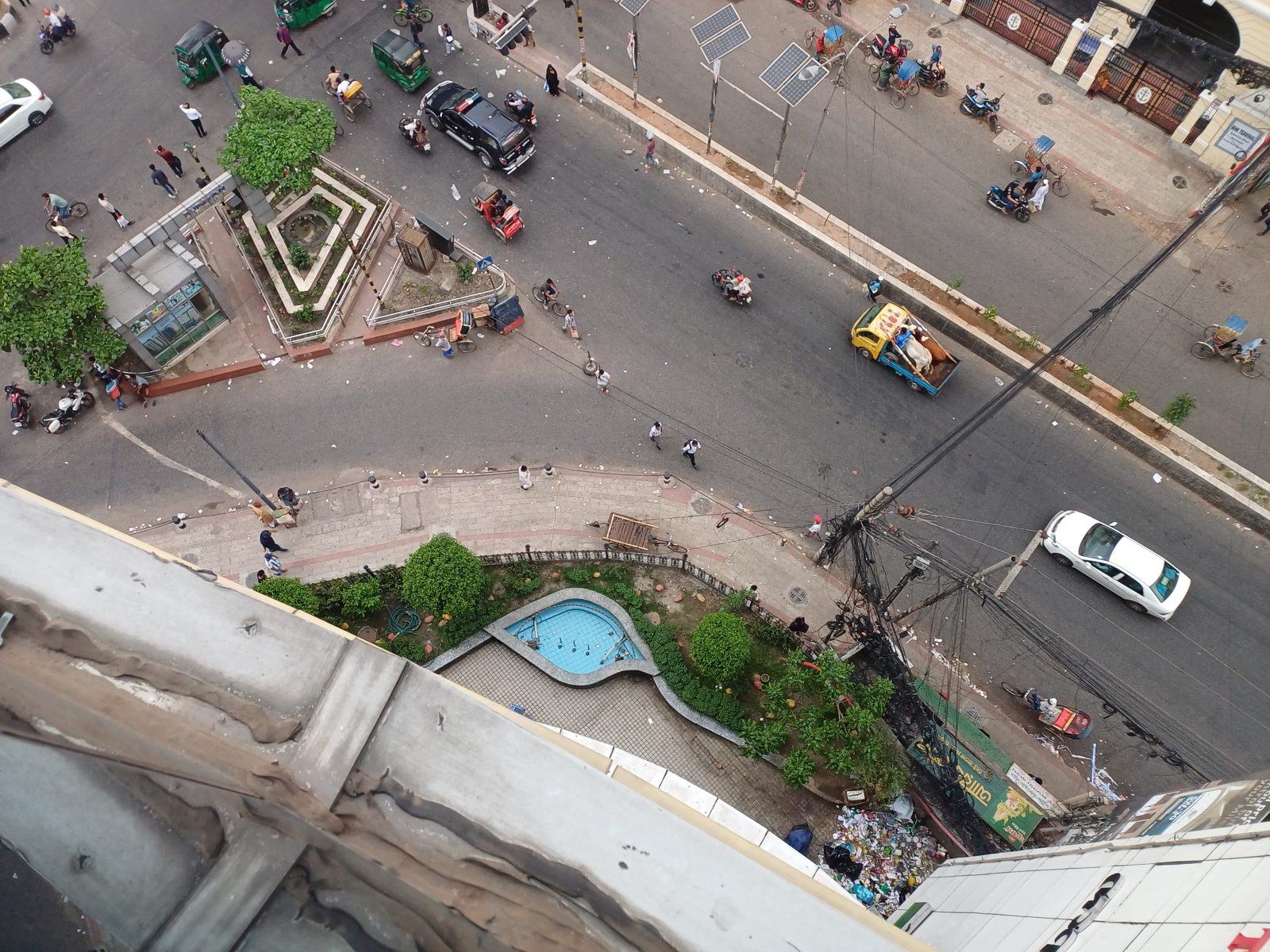
As a traffic analytics team working in Dhaka, I want CNG auto-rickshaws and cycle rickshaws counted as their own classes, so that the vehicle mix is not folded into car and bicycle.
- Model draft
- The detector we tested (YOLO11x, COCO classes) drew 72 boxes. Its class list has neither vehicle. It called 15 objects car, and three of them are cars. The others include CNG auto-rickshaws, rickshaws and motorbikes. It also found two potted plants.
- After correction
- 50 boxes in seven classes. Riders are part of their vehicle, and the false detections are gone.
- Acceptance criteria for a real project
- Every vehicle above an agreed minimum size has one box in the right class, and nobody riding a vehicle is counted as a pedestrian. This sample was not checked against that criterion: a few small or hidden objects are unlabelled.
instance_polygonRoof by roof, from straight above
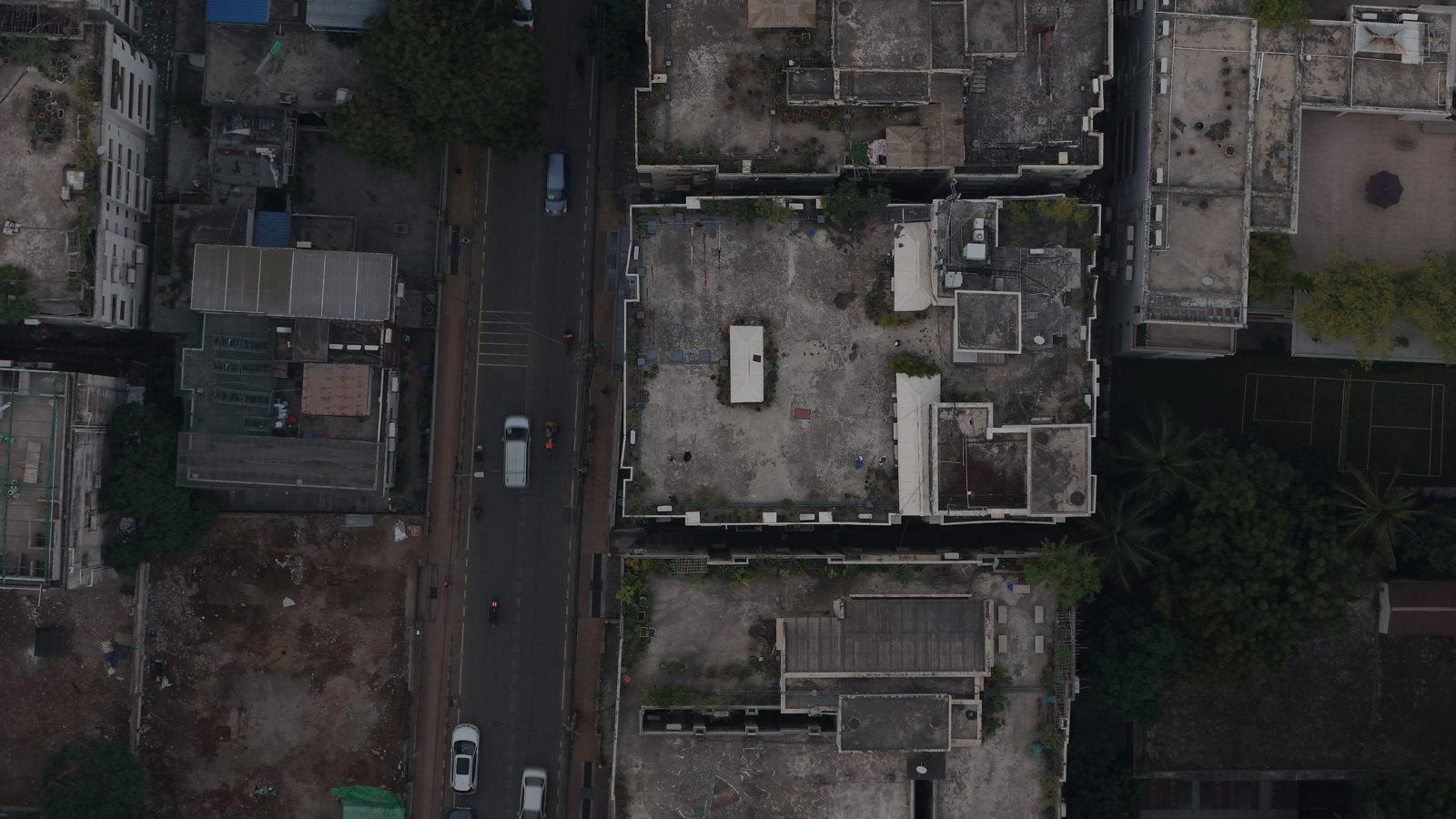
As a rooftop solar team surveying a neighbourhood by drone, I want each roof outlined on its own, so that each visible roof region can feed a later assessment of where panels might fit.
- Model draft
- The detector returned one box, labelled cell phone, around something that is not a phone. It has no class for roofs, so it found no buildings at all.
- After correction
- 13 building outlines, drafted with a segmentation model (SAM 2.1) and corrected, with overhanging trees cut out of the roofs.
- Acceptance criteria for a real project
- Neighbouring roofs never share an outline, and trees over a roof are cut out of its region. Outlines show visible roof, not usable area: shading, structure and obstructions need a separate assessment.
semantic_maskWater and green cover between flights
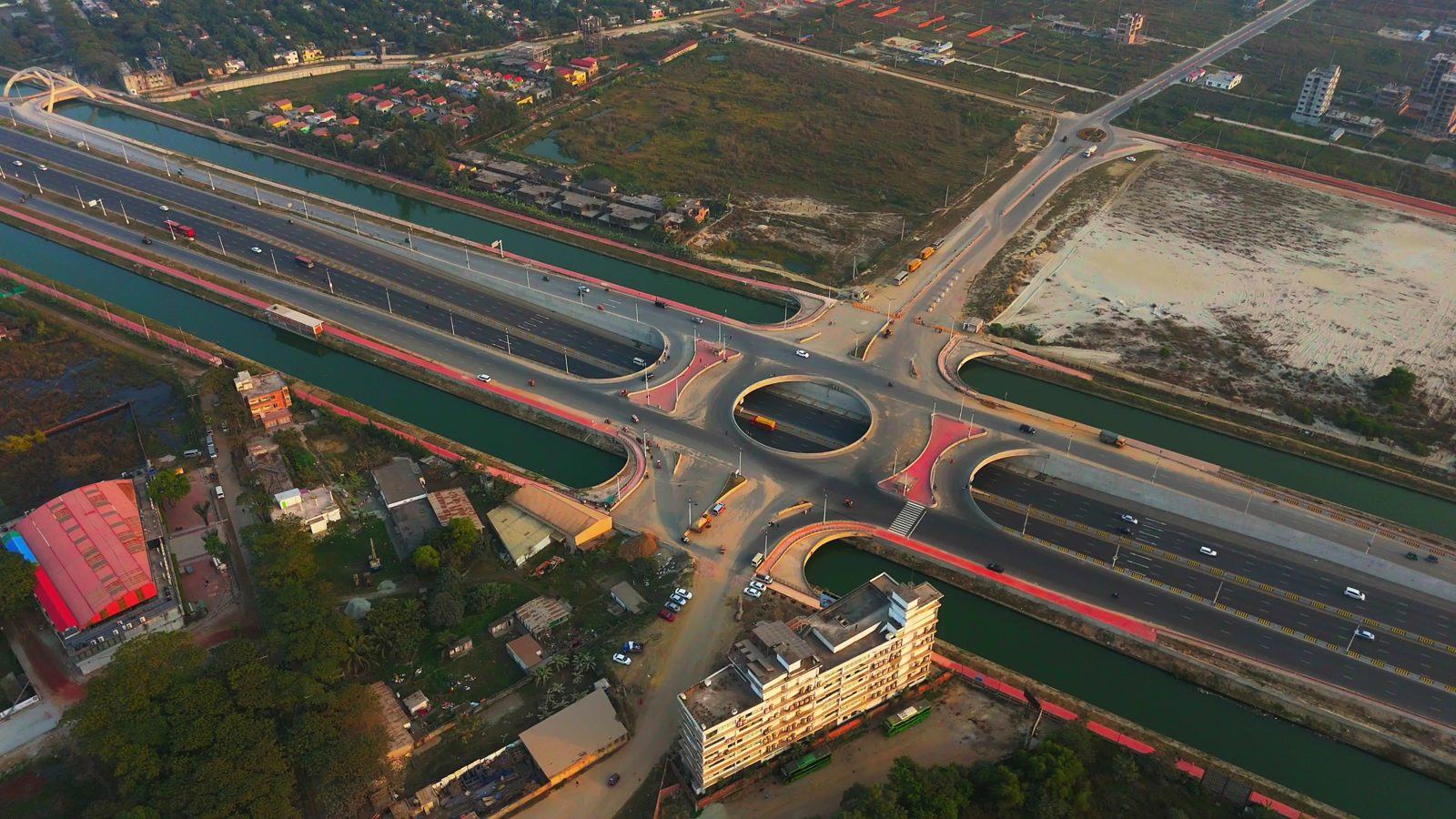
As a city planning or flood monitoring team, I want road, water and vegetation mapped as regions, so that I can compare canal extent and green cover between survey flights.
- Model draft
- The detector found one truck. Point-prompted segmentation spread the eastern canal across the carriageway beside it, so that stretch was redrawn manually.
- After correction
- 9 regions in three classes, with unclassified ground left as background.
- Acceptance criteria for a real project
- Classes never overlap, and nothing is forced into a class it does not belong to. This sample has not been independently reviewed against that criterion.